Vice City Then and Now: From GTA Vice City to GTA 6
The 2002 Vice City was a love letter to Scarface and Miami Vice. GTA 6's version trades pure '80s pastiche for something closer to Miami as it is today.
Grand Theft Auto: Vice City, released in 2002, wasn’t really trying to be a realistic Miami. It was trying to be every ’80s crime movie at once, filtered through neon signage, synth-heavy radio stations, and a plot that borrowed openly from Scarface. It was a loving, exaggerated pastiche of a very specific decade’s pop-culture image of Florida, and it worked precisely because it never pretended to be anything more grounded than that.
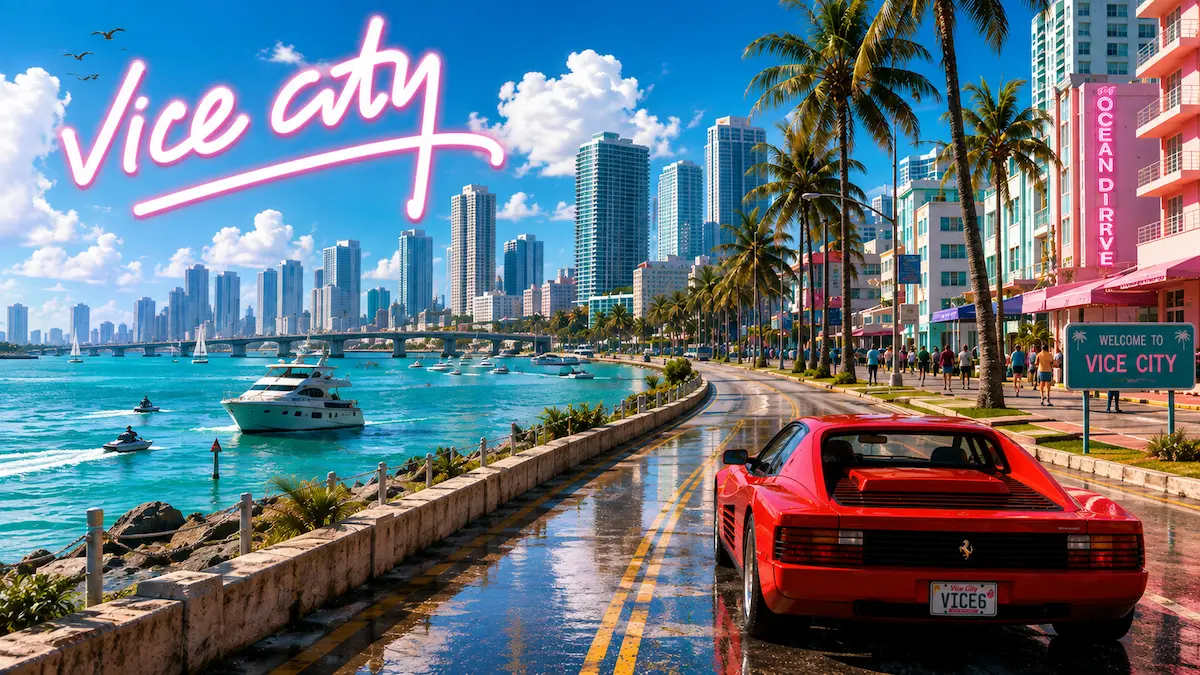
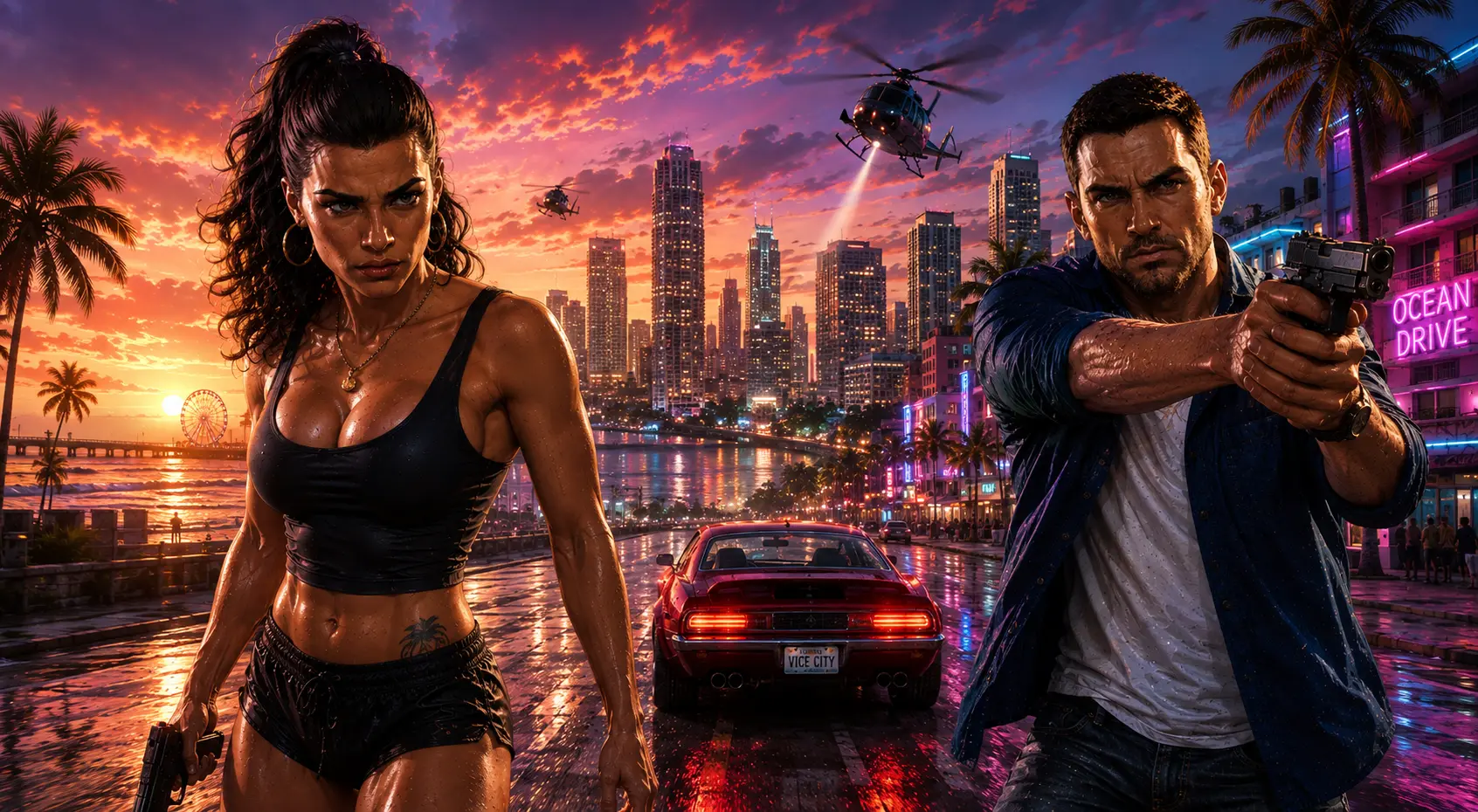
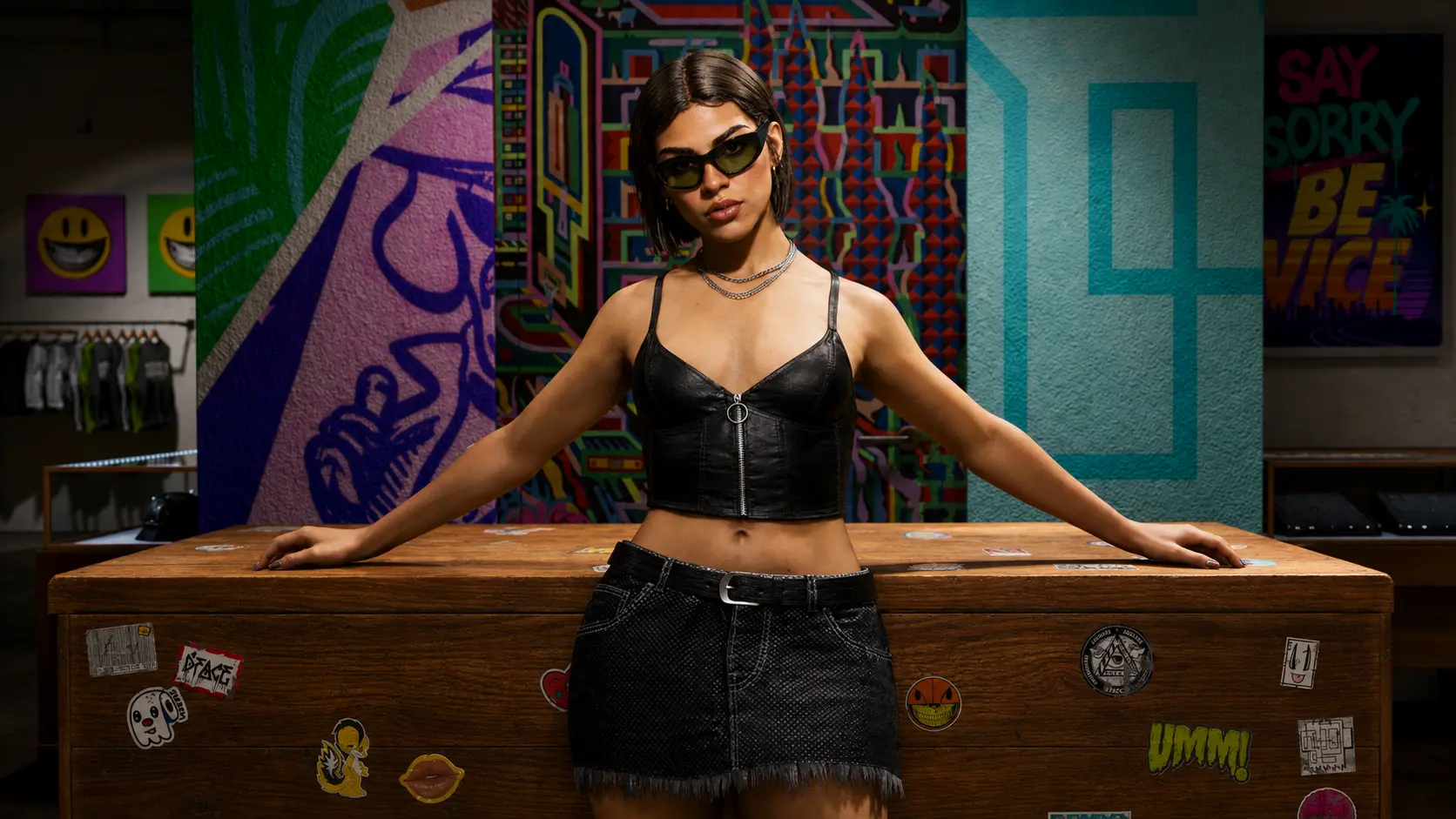
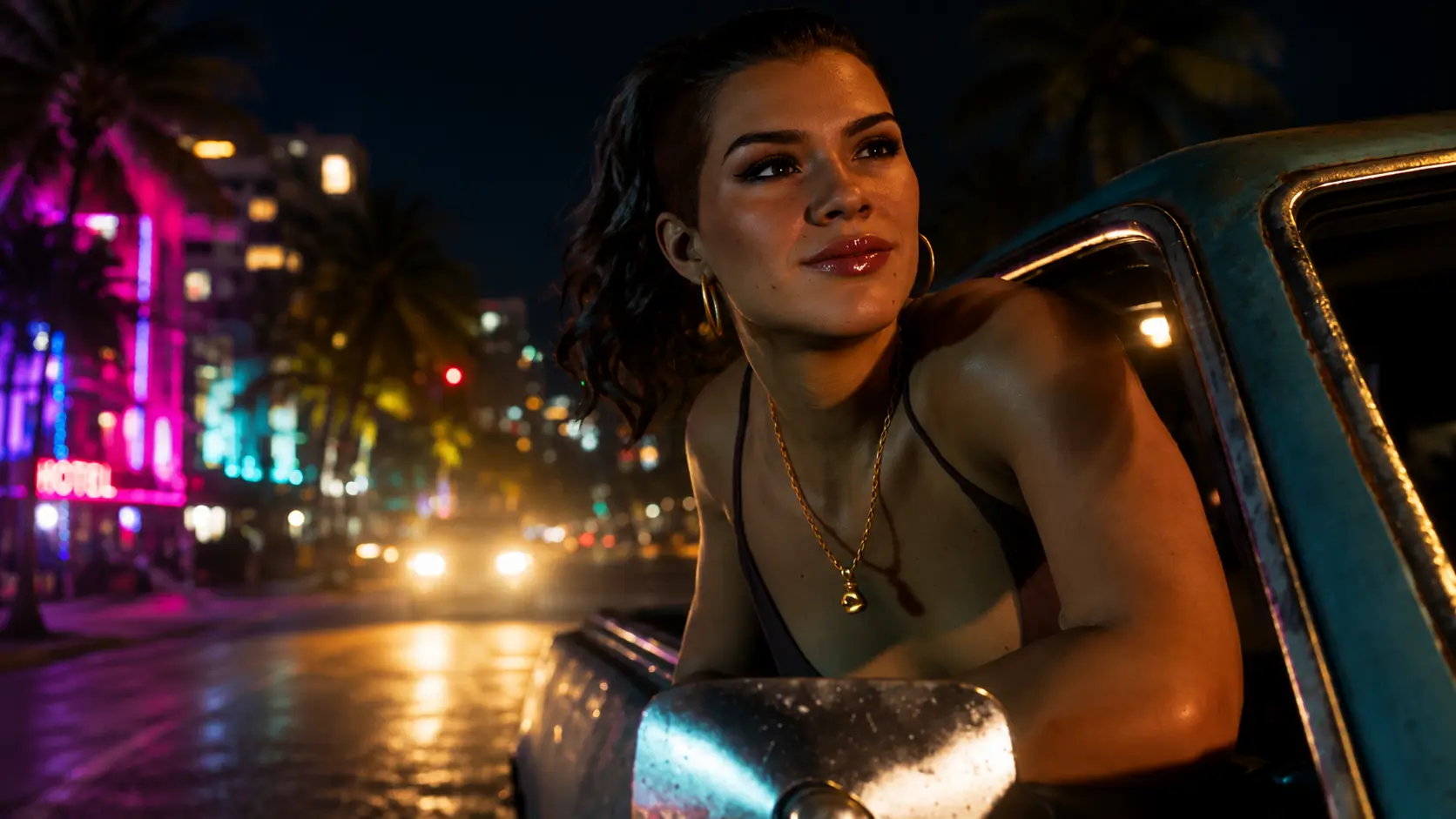
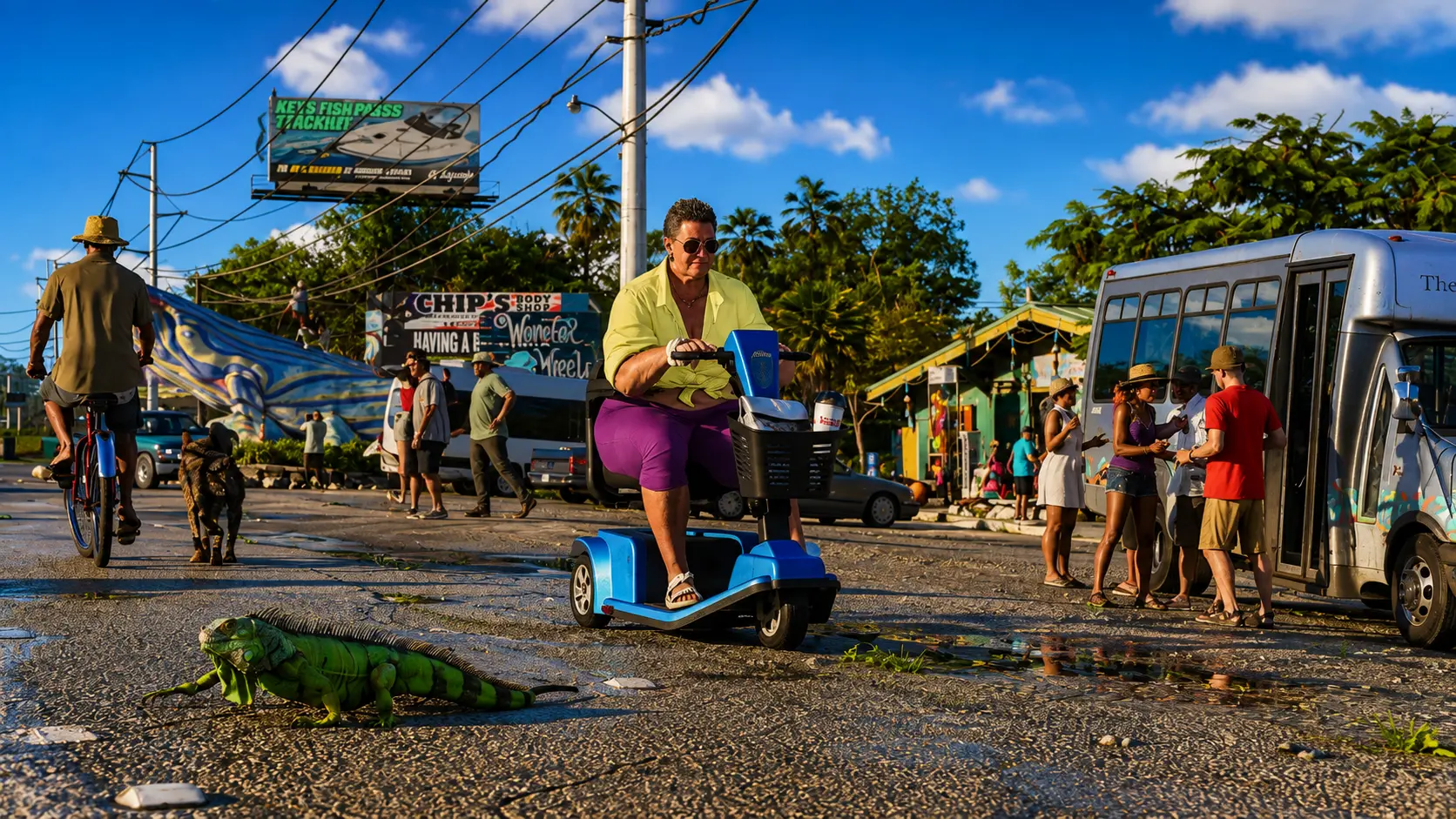
GTA 6’s Vice City is doing something different, and the shift says a lot about how both the series and the city it’s satirizing have changed. Where the 2002 game was pure decade-cosplay, the new version is built around a modern, functioning city with all the contradictions that implies. Luxury condos sit next to neighborhoods being priced out from under longtime residents, influencer culture sits alongside old organized-crime money, and the skyline unmistakably draws on real, present-day Miami rather than a stylized memory of the 1980s. It’s less a recreation of a specific era and more an attempt to satirize the present the way the original satirized its own decade.
That shift shows up in concrete details, not just tone. The original Vice City’s map was compact by necessity, one city and its immediate surroundings, built for a console generation that couldn’t handle much more. GTA 6’s Vice City is the anchor of an entire fictional state, Leonida, surrounded by swampland, small towns, and coastline that the 2002 game never had room to include. Specific real-world references have shifted too. Rather than the more generic “Miami Beach at large” approach the original took, trailer analysis has connected GTA 6’s Vice City directly to specific real streets and buildings: Ocean Drive, Brickell, Little Havana, suggesting a level of geographic specificity the original never attempted or needed to.
What hasn’t changed is the underlying satirical instinct. Both versions of Vice City exist to exaggerate and poke at whatever Florida represents culturally at the moment they were made: cocaine-fueled excess and pastel nostalgia in 2002, a messier mix of wealth inequality, tourism, and online-personality culture in the 2026 version. Rockstar hasn’t abandoned the satire, it’s just aimed it at a different target, because the cultural moment it’s responding to is a different one.
For players who grew up on the original, GTA 6’s Vice City is likely to feel both instantly familiar and genuinely unrecognizable at the same time. The name, the palm trees, and the neon are still there, but the city underneath them has been rebuilt to say something about 2026 rather than to lovingly recreate 1986. That’s arguably a harder needle to thread than the original had to, and it’s one of the more interesting bets GTA 6 is making that doesn’t get discussed as much as the map size or the graphics.
Share this article

About GTA Ready Editorial
GTA Ready is an independent fan site covering Grand Theft Auto VI. We separate what Rockstar has confirmed from rumor and speculation, cite our sources, and correct mistakes openly when new information arrives.