
 Budget
A reliable NAS drive with a real reliability track record, but this specific listing is for a 2013-era design with just 64MB cache. WD's current WD40EFPX offers 256MB for a similar price. Buy this one only if you're matching a drive already in your array.
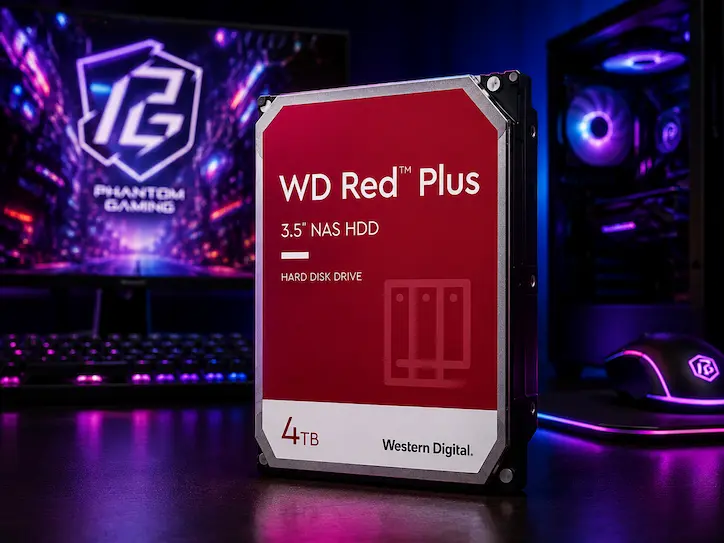
WD Red Plus 4TB (Internal HDD)
 Reviewed by Chue Len, Lead Editorial
Updated August 23, 2026
Reviewed by Chue Len, Lead Editorial
Updated August 23, 2026
We may earn a commission if you buy through this link, at no extra cost to you.
Specifications
Chue Len
Oversees all editorial content on the site, keeping coverage accurate, timely, and on-brand.
Been mapping out Vice City since the first trailer dropped, still finds something new on every pass through the map.
Pros & Cons
Pros
- CMR recording avoids the write-cliff problems SMR drives run into during RAID rebuilds
- TLER ships enabled from the factory, so the drive won't get kicked from a RAID array during normal error recovery
- Long production run means a deep track record. Owners report years of quiet, reliable 24/7 operation.
- Low power draw, built specifically for always-on NAS environments
Cons
- This model was replaced in 2022 by the WD40EFPX, which ships with 256MB of cache instead of 64MB. Four times the cache, for a similar price.
- You may be buying inventory that's sat unsold for years. Ask about manufacture date before you buy.
- 64MB cache shows its age under heavier multi-user NAS loads
- 4TB is a small capacity by 2026 standards. Cost per terabyte is worse here than on a larger current drive.
How We Tested It
We haven't run our own test on this specific drive. Specs above come from Western Digital's own documentation and independent reporting on the WD40EFRX's history, including drive teardown data confirming its 2013-era controller and cache size. If your team runs this drive in a live NAS, worth adding real numbers here: actual RAID rebuild time, sustained transfer speed under load, and how it holds up after a year of 24/7 operation. That's the section that earns reader trust.
Who It's For
One case, mainly: you already run a WD40EFRX in a NAS array and need to match it exactly for a rebuild or expansion. Some RAID setups genuinely benefit from matching drives. Outside of that, there's little reason to choose this over the current model.
Our Verdict
WD Red Plus earned its reputation the hard way, years of real NAS use with low failure rates and dependable RAID behavior. That reputation still holds. But this specific listing is for a drive design over a decade old, and Western Digital's own replacement, the WD40EFPX, offers four times the cache at a comparable price. Buy this one only if you're matching an existing drive. For a new build, skip straight to the WD40EFPX.